Ingredient Library - Niacinamide
Niacinamide in Skincare: The Science Behind Barrier Support, More Even Skin Tone, and Healthy-Looking Skin
Niacinamide has earned a place in skincare because it addresses several concerns that often appear together: dryness, uneven tone, excess shine, and visible signs of aging. Its versatility, however, can make the science sound simpler than it is.
A smoother-looking face does not automatically mean new collagen has formed. A reduction in surface oil does not mean pores have permanently shrunk. And evidence for a 5% cream does not establish that a 15% serum works three times better. Understanding niacinamide means understanding what it does at different levels—from cellular metabolism to pigment distribution—and separating those mechanisms from the results demonstrated in people.
What is niacinamide?
Niacinamide, also called nicotinamide, is the amide form of vitamin B3. Its molecular formula is C₆H₆N₂O, and its molecular weight is approximately 122.12 g/mol. Chemically, it consists of a pyridine ring carrying a carboxamide group.
Unlike the long polymer chains of hyaluronic acid, niacinamide is a small molecule. This distinction helps explain why the two ingredients have different roles: hyaluronic acid is chiefly valued for water-binding behavior, while niacinamide has a broader relationship with skin-cell metabolism and barrier function.

Niacinamide and nicotinic acid are related forms of vitamin B3, but they are different chemicals. A reference to “niacin” can therefore be ambiguous. For skincare ingredient identification, look for Niacinamide on the label.
Why vitamin B3 matters to skin cells
Niacinamide participates in the body’s pathways for producing nicotinamide adenine dinucleotide, or NAD. NAD⁺ and its reduced form, NADH, help cells manage energy-producing reactions. Related NADP⁺/NADPH systems participate in biosynthesis and antioxidant defenses. This does not mean applying niacinamide simply “charges” skin cells. Enzyme activity, nutrient availability, cellular condition, and delivery all influence what happens.
Laboratory research nevertheless provides a useful example. In cultured human keratinocytes, nicotinamide helped prevent ultraviolet-induced ATP depletion and disruption of glycolysis. ATP is a molecule cells use to supply energy for many processes. Another study investigated human keratinocytes and skin outside the body and reported enhanced repair of UV-induced DNA damage under the tested conditions.
These findings help explain scientific interest in niacinamide. They do not establish that an ordinary cosmetic prevents skin cancer, reverses all sun damage, or replaces sunscreen.
Read also: How to layer skincare products correctly
What happens after niacinamide is applied?
A topical product first distributes niacinamide across the skin surface. For biological effects, some of the ingredient must become available within relevant skin compartments. Delivery depends on more than molecular size. Concentration, vehicle, application amount, contact time, skin condition, and other ingredients all matter. A watery texture is not proof of deeper delivery; a thicker cream is not proof of slower action.
After delivery, several processes may contribute to the final appearance of the skin. Some involve lipid production. Others involve pigment handling or inflammatory responses. These processes operate over different timescales. This is why immediate softness after applying a cream and a gradual change in uneven pigmentation should be treated as separate outcomes. The first may be strongly influenced by the moisturizer base; the second requires longer observation.

Barrier support: helping skin manage water loss
The stratum corneum, the skin’s outermost layer, contains flattened cells surrounded by an organized lipid matrix. Ceramides are important components of that matrix. In a foundational study, Tanno and colleagues investigated nicotinamide in cultured human keratinocytes and examined skin barrier effects in vivo. In the cell experiments, six days of exposure increased ceramide biosynthesis relative to controls. The researchers also investigated other stratum corneum lipids.
The relevance is support for a biological pathway: niacinamide can influence the production of materials involved in the permeability barrier. The laboratory increase should not be turned into a claim that a cosmetic multiplies a user’s facial ceramides by the same amount.
A well-functioning barrier helps regulate water escape. This is measured partly through transepidermal water loss, or TEWL. TEWL differs from skin hydration: one concerns water leaving the skin, while the other concerns water present in superficial layers. For a consumer, this distinction explains why an ingredient that supports barrier function may complement a humectant. The two approaches address related aspects of moisture management.
Uneven pigmentation: affecting pigment transfer
Skin pigment is produced by melanocytes and packaged into structures called melanosomes. These pigment-containing structures are transferred to neighboring keratinocytes, contributing to visible skin color. A 2002 study examined niacinamide using several laboratory models and human studies. In the tested coculture system, niacinamide reduced melanosome transfer. It did not directly inhibit mushroom tyrosinase activity or melanin production in the isolated melanocyte experiments. Clinical testing also found improvements in hyperpigmentation with the studied formulations.

This evidence established an important explanation for niacinamide’s tone-evening role: it can influence how pigment is distributed between cells. That is different from exfoliating pigmented surface cells or directly blocking every step of melanin synthesis. It also explains why “brightening” should mean improving the appearance of uneven pigmentation, rather than promising to erase someone’s natural skin color.
Read also: Skincare guide - BioMaxx Skin Lab
Pigmentation has many causes. Persistent melasma, changing spots, and post-inflammatory marks are not interchangeable conditions, so one ingredient should not be presented as an equally effective solution for all of them.
Fine lines, texture, and visible aging
Niacinamide has controlled human evidence for improvements in several appearance-related outcomes. In a 2005 double-blind, randomized split-face study, 50 white women with signs of facial photoaging applied a 5% niacinamide product to one half of the face and its vehicle to the other half twice daily for 12 weeks. Investigators reported improvements in fine lines and wrinkles, hyperpigmented spots, red blotchiness, sallowness, and measured elasticity.
The split-face design is useful because each person acts as her own comparison. However, the sample size, population, treatment duration, and specific formulation limit how broadly the findings can be applied. The study supports visible improvement under those conditions. It does not establish permanent lifting or prove that any niacinamide product rebuilds a defined amount of collagen. A practical expectation is gradual improvement in overall skin appearance, rather than an immediate reshaping effect.
Oiliness, shine, and the appearance of pores
A 2006 clinical publication investigated a moisturizer containing 2% niacinamide and facial sebum measurements. Sebum research requires careful reading because surface oil levels and sebum excretion rate are different measurements. A product can change how shiny skin looks through its texture or oil-absorbing ingredients without changing how much oil sebaceous glands produce.
More recent research offers additional context. A 2025 randomized study enrolled 67 women aged 30–60 and compared a niacinamide formulation, placebo, and groups receiving weekly ultrasound procedures. The niacinamide formulation improved superficial hydration, reduced TEWL, and reduced sebum measurements under the study conditions.
These results are relevant to formulation performance. They are not proof that niacinamide permanently shrinks pores. Pore visibility is influenced by several factors, and “less noticeable” is a more defensible cosmetic description than “closed” or “erased.”
What about acne and redness?
Niacinamide has been studied in inflammatory acne, including a randomized double-blind trial comparing 4% nicotinamide gel with 1% clindamycin gel in 80 participants. This is a different setting from evaluating a general facial moisturizer. Acne severity, formulation, treatment duration, and other therapies affect the outcome. An ingredient’s presence in a cosmetic does not make that product equivalent to a treatment studied in a clinical trial.

Similarly, improvements in red blotchiness in an aging-skin study should not be translated into a promise to treat every cause of facial redness. Rosacea, contact dermatitis, and transient irritation require different assessments. Niacinamide can be useful in a routine while still having limits. Persistent, painful, or scarring acne deserves targeted care rather than repeated changes between cosmetic serums.
New findings: what 2026 research adds
Formulation pH may influence pigmentation effects
A paper published in the April 2026 issue of the International Journal of Cosmetic Science investigated niacinamide at different pH levels.
The researchers combined cell experiments with vehicle-controlled facial studies. They reported additional effects on pigmentation-related processes in acidic formulations. Clinical comparisons included 2% niacinamide at pH 2.5 over four weeks and 5% niacinamide at pH 4 over eight weeks. The tested acidic formulations performed better for certain pigmentation outcomes than neutral-pH niacinamide and vehicle comparisons.
All authors were affiliated with Procter & Gamble. The findings are interesting evidence about formulation design, rather than a reason to acidify a product at home. Stability and tolerability require finished-formula testing.
Combination sunscreens require combination-level conclusions
A 2026 trial investigated a broad-spectrum sunscreen containing niacinamide and sclareolide in 20 participants with Fitzpatrick skin types IV–V. Researchers used controlled light exposure, with or without tape stripping, to model pigmentation responses.
Read also: I'm 39 - time to take care of my skin - what you need to know
The protected sites developed less pigmentation than unprotected sites. However, the design did not establish how much benefit came specifically from niacinamide rather than UV filters, sclareolide, or their combination. The authors called for comparisons with and without the additional ingredients. [5] This is a useful lesson for reading skincare research: a successful formula can contain niacinamide without proving that niacinamide alone produced the entire result.
Which concentration makes sense?
The strongest concentration claim is the one connected to an appropriate study, not the largest number on a bottle.
| Concentration | Research context | What to conclude |
|---|---|---|
| 2% | Studied in a sebum-focused moisturizer and some pigmentation formulations | Lower concentrations can have a meaningful research basis |
| 4% | Studied in specific acne gels | Results concern those treatment formulations |
| 5% | Studied in controlled facial-aging and pigmentation research | A well-studied level for several cosmetic outcomes |
| 10% and above | Found in commercial products | A higher label percentage alone does not demonstrate greater benefit |
These are research examples, not a universal prescription. The evidence cited here does not establish that doubling or tripling concentration proportionally improves results.
A sensible selection process considers the complete formula, the intended concern, and skin tolerance. Someone already using several niacinamide-containing products may not need another concentrated serum.
Niacinamide with hyaluronic acid, retinal, and other ingredients
Niacinamide and hyaluronic acid have complementary roles. One is associated with cellular and barrier-related processes; the other is especially useful for attracting and retaining water. A formulation can combine these approaches without requiring the ingredients to perform the same task.

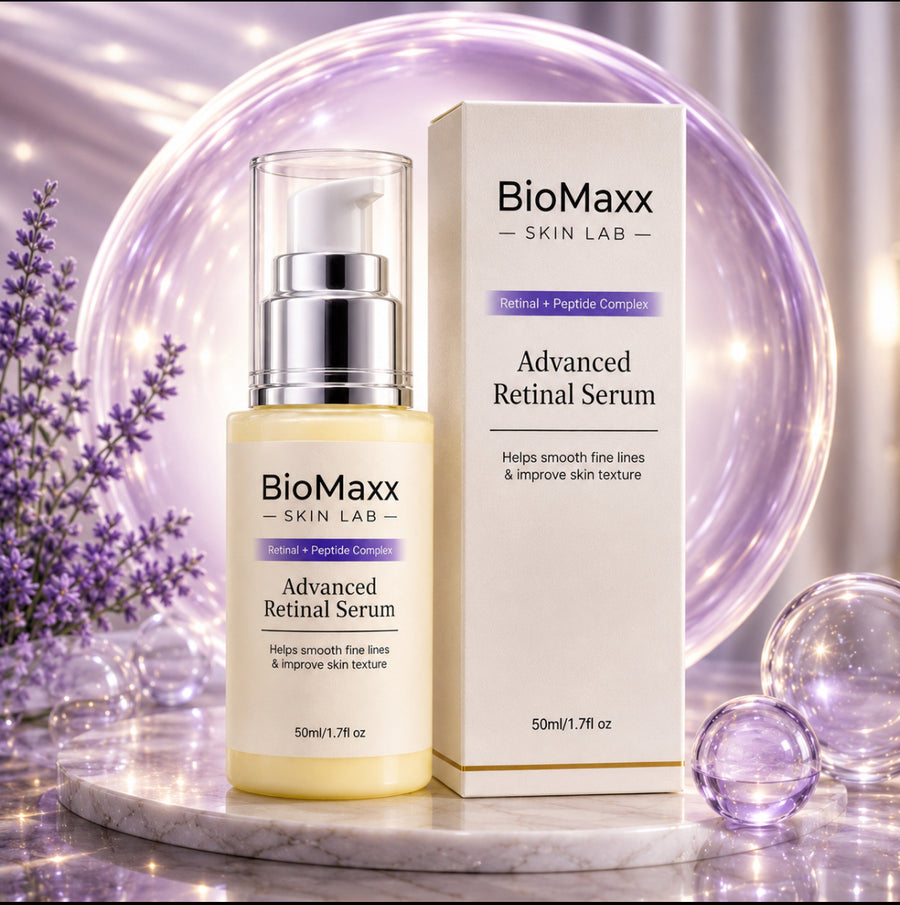
Niacinamide may also appear alongside retinal or other retinoids. Their presence together does not establish that niacinamide prevents all retinoid irritation. Follow the finished product’s directions and adjust frequency if the routine becomes uncomfortable. Compatibility questions are best assessed at the formulation level. Ingredients sharing a bottle have to be tested for stability and performance; layering separate products introduces additional variables. There is little value in maintaining a complicated routine if it repeatedly causes stinging.
For BioMaxx Skin Lab’s ingredient education, useful language includes “supports the skin barrier,” “helps improve the appearance of uneven tone,” and “promotes smoother-looking skin.” Specific claims about the brand’s products should reflect their actual formulas and testing.
How to introduce it into a routine
Begin with one product and use it according to its directions. If your skin is reactive, introduce it gradually so you can distinguish a useful effect from irritation. A practical routine can remain simple: gentle cleansing, an appropriate niacinamide-containing product or moisturizer, and daytime sun protection. More layers are optional.
Assess gradual outcomes under consistent conditions. Photographs taken in the same light are more informative than comparing a flattering morning photograph with an evening photograph under overhead lighting. If burning, itching, or persistent redness develops, stop using the product. The cause may be niacinamide, another ingredient, or an interaction with an already irritating routine.
Do not interpret a flare as proof that the product is “working.” Tolerability is part of performance.
Frequently asked questions
Are niacinamide and nicotinamide the same?
Yes. They are two names for the same chemical. “Niacinamide” is the name commonly used on cosmetic ingredient lists.
Is niacinamide an exfoliating acid?
No. It is a vitamin B3 derivative, not an alpha- or beta-hydroxy acid. Its best-supported skincare roles involve processes such as barrier support and pigment handling.

How long does it take to see a difference?
Some pigmentation studies assessed changes after four to eight weeks, while a controlled facial-aging study ran for 12 weeks. These are study timelines, not guaranteed deadlines for every product or person.
Is 10% better than 5%?
The percentage alone cannot answer that. A well-tolerated, well-formulated product at a studied concentration may be a better choice than a stronger product with no comparative evidence.
Does it remove dark spots?
It can improve the appearance of some uneven pigmentation. Results depend on the cause of the pigmentation, the formulation, and continued exposure to triggers.
Does it permanently shrink pores?
That claim is not established by the research discussed here. Improvement in shine or texture should not be described as permanent anatomical pore reduction.
Can I use it with hyaluronic acid?
They serve complementary purposes and can be included in the same routine. Choose a combination that feels comfortable rather than adding layers solely to increase the number of active ingredients.
Can it replace sunscreen?
No. Laboratory findings involving UV stress and DNA repair do not provide an SPF rating or establish adequate protection from sunlight.
Does niacinamide cause purging?
It should not automatically be blamed on “purging” when a product causes new bumps. Irritation, the formula, and unrelated breakouts are other possibilities. Persistent worsening is a reason to reassess use.
Can sensitive skin use it?
Tolerance varies. Controlled studies have reported good tolerability for particular formulations, but that cannot guarantee comfort with every concentration or combination.
Do I need it in every product?
No. There is no requirement to use niacinamide in a cleanser, mist, serum, and moisturizer simultaneously. A routine should serve your skin’s needs and remain comfortable.

Mmost important scientific sources
Tanno O, Ota Y, Kitamura N, Katsube T, Inoue S. (2000). Nicotinamide increases biosynthesis of ceramides as well as other stratum corneum lipids to improve the epidermal permeability barrier. British Journal of Dermatology, 143:524–531. Foundational evidence for barrier-lipid mechanisms. Read the study.
Hakozaki T, et al. (2002). The effect of niacinamide on reducing cutaneous pigmentation and suppression of melanosome transfer. British Journal of Dermatology, 147:20–31. Key laboratory and clinical evidence for pigment-transfer effects. Read the study.
Bissett DL, Oblong JE, Berge CA. (2005). Niacinamide: A B vitamin that improves aging facial skin appearance. Dermatologic Surgery, 31:860–865. Controlled split-face evidence for several visible-aging outcomes. Read the study.
Hakozaki T, et al. (2026; first published online in 2025). Synergistic effects of niacinamide and low pH on melanin synthesis, melanocyte function and hyperpigmentation: In vitro and clinical insights. International Journal of Cosmetic Science, 48:445–455. Recent evidence that formulation pH can influence outcomes. Read the study.
Passeron T, et al. (2026; first published online in 2025). An Investigator-Blinded, Randomized Trial of a Broad-Spectrum Sunscreen Containing Sclareolide and Niacinamide for the Prevention of Post-inflammatory Hyperpigmentation in Skin of Color. Dermatology and Therapy, 16:405–421. Recent combination-product evidence with important attribution limits. Read the study.