Ingredient Library - Hyaluronic Acid
Hyaluronic acid in skincare: How it works, what molecular weight means, and what science really shows. Hyaluronic acid is famous for making skin look hydrated and plump. Its more interesting story begins with a question: what does “hydration” actually mean?
Skin can contain more water at its surface without having a stronger barrier. A fine line can look softer without a change in underlying collagen. An ingredient can penetrate part of the epidermis without reaching the dermis in meaningful quantities. Understanding these distinctions makes hyaluronic acid easier to use and skincare claims easier to evaluate. This guide explains its chemistry, behavior in skin, practical benefits, and limitations, drawing on laboratory research and human studies, including publications from 2026.

Hyaluronic acid (HA)—also referred to in biochemical literature as hyaluronan—is a linear, unbranched, non-sulfated glycosaminoglycan (GAG) composed of repeating disaccharide units of D-glucuronic acid and N-acetyl-D-glucosamine linked via alternating $\beta$-(1$\rightarrow$4) and \(\beta\)-(1$\rightarrow$3) glycosidic bonds. Unlike other glycosaminoglycans found in the human extracellular matrix (ECM), HA lacks a covalent protein core and undergoes no post-translational sulfation, allowing it to fold into expansive, negatively charged random-coil structures capable of binding up to 1,000 times its molecular weight in water.
Within a 70 kg human body, roughly 15 grams of endogenous hyaluronan exist at any given moment, with more than 50% concentrated within the skin. However, cutaneous HA exhibits remarkably rapid metabolic kinetics: approximately one-third of the total skin HA pool is degraded and resynthesized every 24 hours. Understanding how exogenous, topically applied HA interacts with this dynamic biological reservoir requires examining its molecular weight spectrum, receptor-mediated cellular signaling, and formulation derivatives.

What is hyaluronic acid?
Hyaluronic acid, also called HA or hyaluronan, is a linear polysaccharide: a long chain of repeating sugar units. Each repeating pair contains D-glucuronic acid and N-acetyl-D-glucosamine. It belongs to the glycosaminoglycan family.
Its chemistry explains its affinity for water. Hydroxyl, carboxyl, and acetamido groups participate in interactions with water; at physiological pH, carboxyl groups are largely negatively charged. The resulting hydrated polymer occupies space and changes how a solution flows. Chain length, concentration, salts, and surrounding ingredients influence these properties.

Experimental spectroscopy has investigated hydrogen bonding within this structure and the possible contribution of water bridges. This is a molecular explanation for water retention, rather than evidence that every finished serum delivers an identical amount of hydration. Despite its name, HA is not used like an exfoliating glycolic or salicylic acid. In a conventional hydrating cosmetic, its main purpose is water management and skin conditioning.
Read also: Hyaluronic acid in modern skincare
Your skin already makes hyaluronic acid
HA is naturally present in the extracellular matrix - the environment surrounding cells - with substantial amounts in the dermis. Epidermal keratinocytes also produce it. Three enzymes, hyaluronan synthases HAS1, HAS2, and HAS3, assemble HA at the cell membrane. Skin continually produces and breaks down this material; it is a dynamic component of tissue, not a permanent reservoir.
HA also interacts with cell receptors, including CD44. Researchers study these interactions because they may influence how cells respond to their surroundings. However, biological effects depend on experimental conditions. One human epidermis reconstruction study found that manipulating HA did not change several markers of keratinocyte differentiation. A separate laboratory study found molecular-weight-dependent effects on CD44 expression without a corresponding increase in HAS1 protein.
The practical implication is important: the fact that natural HA participates in skin biology does not prove that applying a cosmetic increases the skin’s own HA production or accelerates renewal.
What happens when you apply it?
1. The formula distributes HA and water across the surface
A serum, cream, or mist delivers HA within a complete formulation. Water, other humectants, emulsifiers, oils, and film-forming ingredients affect how it spreads and feels.
A mist provides a light application, while a cream can supply both water-attracting ingredients and components that limit evaporation. These formats serve different needs; a thicker texture does not automatically indicate a higher effective HA dose.
2. HA helps maintain a hydrated environment
HA functions as a humectant. Its water-attracting properties help retain moisture within the applied film and accessible superficial skin layers.
This does not mean it creates water. Its behavior depends on the water already present in the formulation and skin, environmental conditions, and the rest of the product. Marketing phrases about holding enormous multiples of its weight should not be interpreted as a measurement of how much water a finished cosmetic will add to your face.
3. Hydration changes the appearance of the outer skin
The stratum corneum is the outermost epidermal layer. Improving its hydration can make a rough, dry surface feel softer and look more supple.

Human studies support hydration benefits from topical HA formulations. In a 2021 facial photoaging investigation, researchers evaluated a finished HA serum using clinical and instrumental methods and reported improved hydration. Because a finished serum was tested, the result belongs to that formulation; it is not a guaranteed percentage improvement for all HA products.
4. Moisture retention depends on the complete routine
Humectancy and prevention of water loss are related but different functions. Hydration measurements estimate water content in superficial skin. Transepidermal water loss, or TEWL, measures water escaping through the skin. A product can improve one measurement without significantly improving the other. That is why an HA serum may feel helpful while dry skin still needs a cream.
Molecular weight: why size matters
HA chains vary greatly in length. Molecular weight is commonly expressed in kilodaltons, or kDa. There is no single universally applied cosmetic classification for “low,” “medium,” or “high” molecular weight, so a supplier’s actual size range is more informative than the category alone.
A Raman spectroscopy study compared HA fractions in human skin. Under its experimental conditions, lower molecular weights of approximately 20–300 kDa crossed the stratum corneum, while higher weights of approximately 1,000–1,400 kDa did not.
This supports a size-dependent difference in penetration. It does not establish that every small HA molecule reaches the dermis, that more penetration always produces a better result, or that a serum behaves like an injectable filler.
High-molecular-weight HA can still be useful at the surface. A molecule does not need to travel deeply to contribute to a hydrating film. Conversely, lower-molecular-weight HA may be useful where a formulation is designed to improve delivery into superficial skin.
“Multi-weight” formulas combine fractions with different properties. That is a reasonable formulation strategy, but the number of fractions alone does not demonstrate superiority. Finished-product comparison studies would be needed.

What controlled studies actually show
Hydration in older, dry skin
A 2024 double-blind randomized trial enrolled 36 adults aged 60–80 with dry skin. Each participant applied low-molecular-weight HA lotion, high-molecular-weight HA lotion, and the vehicle to separate leg sites.
After four weeks, the low-molecular-weight treatment produced higher skin capacitance, a hydration-related measurement, than both alternatives. However, TEWL and clinical symptom scores did not differ significantly between groups. No adverse effects were reported.
Read also: I'm approaching 50. What skin serum i really need?
This is useful evidence for hydration under defined conditions. Its limitations include the small sample, short duration, older population, and treatment of leg skin rather than the face.
Fine lines and skin texture
A 2011 controlled study included 76 women aged 30–60. Participants used creams containing 0.1% HA in different molecular weights, with vehicle cream around the opposite eye. The investigators reported improvements in hydration and elasticity across the HA formulations. The 50 and 130 kDa groups also showed improvements in wrinkle-depth measurements after 60 days.

These findings support the possibility of softer-looking fine lines with sustained use. They do not establish permanent wrinkle removal or prove that collagen was rebuilt. Hydration-related smoothing and structural remodeling are different outcomes.
New evidence on layering in 2026
A 2026 randomized study assigned 123 volunteers to cleanser control, HA serum, moisturizing cream, or serum followed by cream. At 30 minutes, all three moisturizing approaches improved hydration compared with cleanser alone. At eight hours, only the combined routine remained significantly higher than the cleanser control for hydration. TEWL findings followed a different pattern: only the serum group remained lower than control at eight hours.
The study supports complementary formulation roles, but it examined particular products over eight hours. Both authors were employees of the company associated with the research. It should inform expectations without becoming a universal promise about all serum-and-cream combinations.
The frontier: advanced delivery systems
A 2026 randomized split-face study investigated dissolving, star-shaped HA microparticles in an oil-based serum. Twenty women aged 47–58 used the test and comparison regimens for four weeks. The microparticles were designed to create transient microchannels during fingertip rolling. The treated side showed greater improvements in hydration and TEWL; other skin measurements were exploratory. No adverse events were observed in this small study.
This is an interesting delivery approach, but it is materially different from ordinary dissolved HA. Its results should not be used to claim that a conventional hydrating mist creates microchannels, delivers ingredients to the same depth, or produces equivalent effects.
Ingredient names: what the label can tell you
Several related names appear in cosmetic ingredient lists:
| Ingredient name | What it indicates | What it does not establish |
|---|---|---|
| Hyaluronic Acid | The HA polymer | A specific chain length or proven clinical result |
| Sodium Hyaluronate | The sodium salt of HA | Automatically smaller molecules or deeper penetration |
| Hydrolyzed Hyaluronic Acid | HA broken into shorter chains | One standardized molecular weight |
| Sodium Acetylated Hyaluronate | A chemically modified HA derivative | That the whole formula outperforms conventional HA |
| Sodium Hyaluronate Crosspolymer | A crosslinked HA network | The same behavior as an injectable filler |
A 2025 scientific review discusses these different cosmetic forms. Ingredient naming identifies a chemical category, while molecular-weight specifications and finished-product testing provide additional information.
This distinction prevents a common misunderstanding: sodium hyaluronate is not inherently “low molecular weight” simply because it is a salt.

How much is enough?
There is no universal best percentage for every HA formulation. The 2011 controlled study demonstrated benefits with 0.1% HA, illustrating that a relatively low concentration can be useful. A large number on a label may also describe a raw-material solution or a multi-ingredient complex rather than pure HA solids. Consumers should look for clear explanations of what the percentage measures.
More informative questions include: Was the finished product tested? Was there a comparison group? How long did benefits last? Were participants similar to the intended users? A product that layers comfortably and is used consistently may be more useful than one selected solely for an impressive concentration claim.
How to use HA thoughtfully
For a straightforward routine, apply a small amount of a hydrating serum or mist after cleansing. Slightly damp skin can make spreading easier, but it is a practical option rather than a requirement for HA to function. If skin remains tight or dry, follow with a moisturizer suited to your needs. The 2026 layering study provides a useful reason to consider this combination, while also reminding us that results depend on the actual products.
Avoid repeatedly adding more serum when the problem is persistent irritation, an unsuitable cleanser, or an uncomfortable formula. Reduce the routine to products your skin tolerates and seek professional advice for ongoing symptoms.
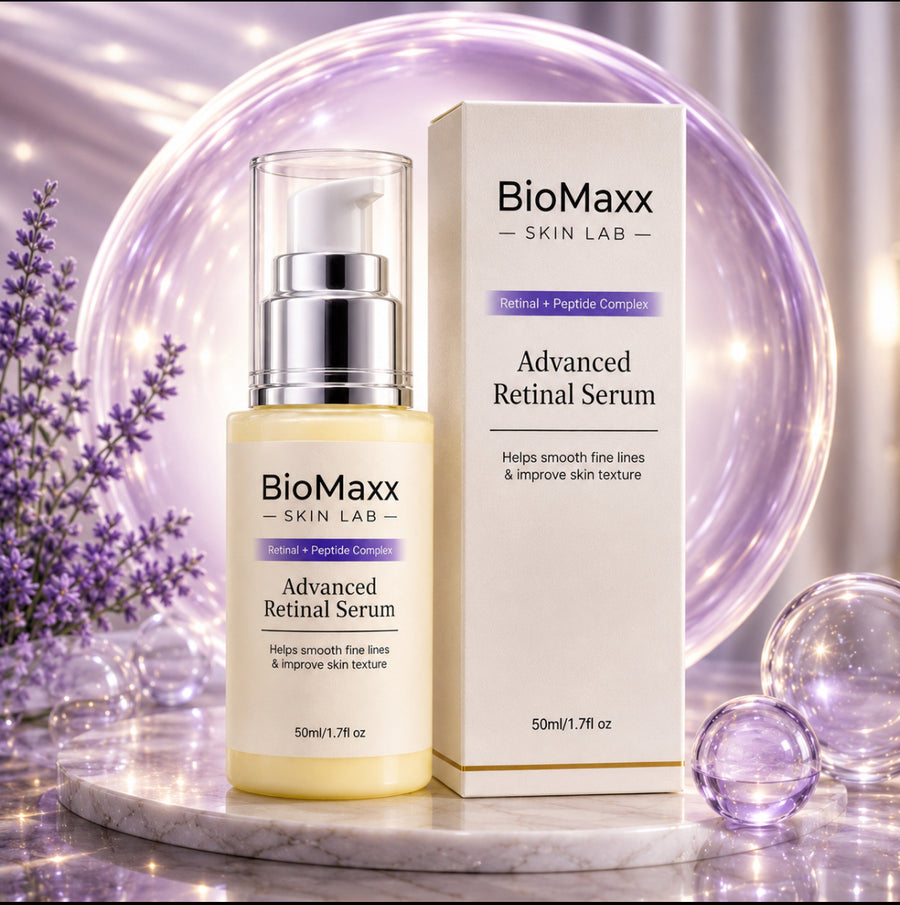
For BioMaxx Skin Lab’s ingredient education, the clearest role to explain is hydration support: helping skin look fresher, smoother, and more supple. Claims about a particular product’s hydration duration, penetration depth, or wrinkle reduction should be based on testing of that finished product.
Safety and realistic expectations
A published cosmetic safety assessment concluded that HA and its sodium and potassium salts were safe under the cosmetic uses assessed. That finding supports their established skincare role, but does not guarantee that every person will tolerate every finished formula.

If a product burns, itches, or causes persistent redness, stop using it. The cause may be another ingredient or the overall formulation; an ingredient list alone cannot diagnose the reaction. HA’s value is strongest when expectations are specific. Better hydration can be meaningful: skin may feel more comfortable and look less dry. Those benefits deserve accurate explanation without promises of permanent lifting or injectable-like volume.
Frequently asked questions
Is hyaluronic acid an exfoliant?
No. Its principal role in ordinary skincare is hydration and conditioning. The word “acid” does not mean it works like an exfoliating acid.
Does it penetrate the skin?
Some lower-molecular-weight fractions have crossed the stratum corneum in experimental research. Larger fractions may remain mainly at the surface. Neither finding alone predicts the performance of a finished product.
Is sodium hyaluronate better?
There is no universal winner. It is a useful HA salt, but its name does not reveal molecular weight or establish superiority.
Can it reduce wrinkles?
Some controlled research supports improvements in fine-line and wrinkle measurements with particular formulations. Expect cosmetic smoothing rather than guaranteed permanent correction.
Do I need a moisturizer afterward?
Consider one if a serum or mist leaves skin feeling dry or tight. A tested serum-and-cream routine sustained hydration better than cleanser alone at eight hours in a 2026 study; individual products can behave differently.
Can oily skin be dehydrated?
Oiliness and water content describe different properties. Choose texture and routine according to comfort rather than assuming that a shiny surface never needs hydration.

Does it rebuild collagen?
That should not be assumed from the presence of HA. Hydration results, laboratory signaling findings, and evidence of new collagen formation are separate claims requiring separate evidence.
How quickly should I expect results?
Some formulations produce measurable hydration changes shortly after application. Studies of appearance-related changes may run for weeks. The relevant timeframe is the one demonstrated for the product and outcome being discussed.
Are results permanent?
A topical hydrating product should be viewed as ongoing skincare. Available short-term studies do not establish permanent correction after use stops.

Most important scientific sources
Muhammad P, et al. (2024). Effectiveness of topical hyaluronic acid of different molecular weights in xerosis cutis treatment in elderly: a double-blind, randomized controlled trial. Archives of Dermatological Research, 316:329. Relevant for hydration versus TEWL and molecular-weight comparisons. https://pubmed.ncbi.nlm.nih.gov/38829483/
Essendoubi M, et al. (2016). Human skin penetration of hyaluronic acid of different molecular weights as probed by Raman spectroscopy. Skin Research and Technology, 22:55–62. Relevant for experimental penetration evidence. https://doi.org/10.1111/srt.12228
Pavicic T, et al. (2011). Efficacy of cream-based novel formulations of hyaluronic acid of different molecular weights in anti-wrinkle treatment. Journal of Drugs in Dermatology, 10:990–1000. Relevant for controlled hydration and wrinkle measurements. https://pubmed.ncbi.nlm.nih.gov/22052267/
Maldonado López AM, da Silva Souza ID. (2026). A serum and cream moisturization regimen outperforms separate use in sustaining hydration, reducing TEWL, and balancing surface lipids over an 8-h study. International Journal of Cosmetic Science, 48:1042–1054. Relevant for recent human evidence on layering. https://doi.org/10.1111/ics.70100
Dissolving hyaluronic acid microparticles improve skin barrier function, hydration, and elasticity in a randomized split-face clinical trial (2026). Scientific Reports. Relevant for emerging delivery technology and its limitations. https://doi.org/10.1038/s41598-026-70832-8
Additional supporting references
Experimental NMR research on HA hydrogen bonding: https://pubmed.ncbi.nlm.nih.gov/20422073/
Human epidermal reconstruction research: https://pubmed.ncbi.nlm.nih.gov/26627828/
Molecular-weight-dependent CD44/HAS1 research: https://pubmed.ncbi.nlm.nih.gov/33908161/
Draelos ZD, et al. (2021). Efficacy Evaluation of a Topical Hyaluronic Acid Serum in Facial Photoaging: https://doi.org/10.1007/s13555-021-00566-0
Hyaluronic Acid in Topical Applications: The Various Forms and Biological Effects of a Hero Molecule in the Cosmetics Industry (2025): https://pmc.ncbi.nlm.nih.gov/articles/PMC12731180/
Cosmetic safety assessment (2009): https://pubmed.ncbi.nlm.nih.gov/19636067/